Under the geopolitical influence
After all, ‘spheres’ is just another word for ‘balls’

A single, audacious operation in Venezuela has reignited talk of spheres of influence and great-power restraint. But history suggests that treating influence as something that can be neatly zoned is less a strategy than a dangerous act of self-deception.
On the face of things, US President Donald Trump had a very successful international start to 2026, achieving in one morning’s work something the Russian president has spent years trying to achieve in Ukraine.
The snatching of Nicolas Maduro from his own bed without the loss of a single US life was an audacious masterstroke that doubtless benefited from being bluntly focused on a simple, single aim. Having the backing of the might of the US military was another factor, the definitively surgical strike likely role-played over and over again for weeks with elite troops and aided by the insight that only comes with a tacit insider’s knowledge.
Venezuela’s government was decapitated in hours, the bluntness of the action leaving all commentators impotently asking what now? Or more salaciously, who next?
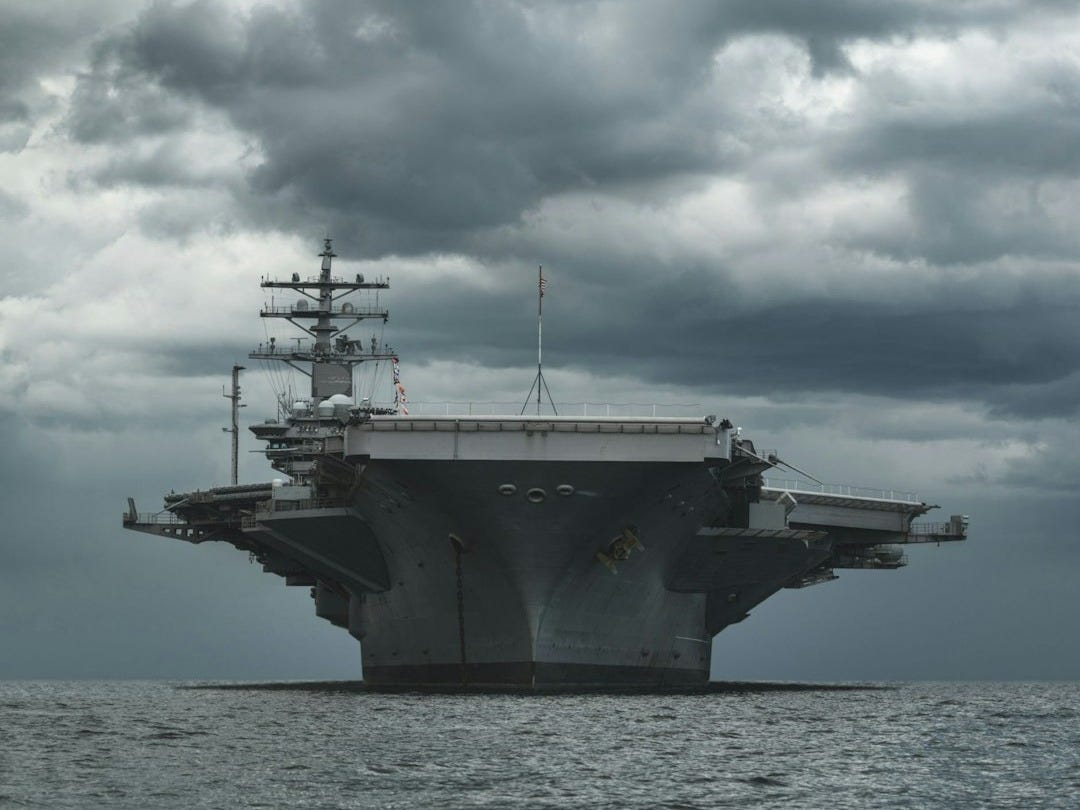
Greenland, Colombia, Mexico and Cuba are the leading candidates according to seasoned observers – the latter three having the distinctly uncomfortable disadvantage of having a primed US carrier battle group sitting within a couple of days’ sailing time of each.
It’s unfair to draw parallels with Russia’s special military operation (SMO) in Ukraine, which gambled on using Belarus to achieve a similar swift impact. Inevitably, once that failed, there was no viable plan B apart from doubling down with catastrophic consequences. And that’s why commentators have been making the comparison both inside and outside Russia. By some timelines, the SMO will surpass the duration of the Great Patriotic War of 1941-1945 this month. Next month it will enter its fifth year – though there are many that will trace the war’s start to the invasion and annexation of Crimea in 2014. By that timeline, it’s Russia’s longest conflict of the last 126 years.
That comes against a track record of two from two – Russia’s late-2024 inability to preserve Assad’s regime in any meaningful sense now compounded by its early 2026 inability to defend Maduro. Lukashenko’s decision to cooperate with US diplomats and release Belarussian political prisoners now looks like a good reading of the tea leaves.
Much of the driving force behind Venezuela was enshrined in the US National Security Strategy, released in early December to some international (especially European) dismay. It shouldn’t have been such a surprise, much of its content reflects the very clear drumbeats that have come from the Trump administration, even before assuming power. In truth, though more bluntly phrased than ever, the document encapsulates what many US presidents since Clinton have sought to do – reduce America’s role as the global policeman. Slightly awkwardly, it’s Trump’s Republican predecessors who have tended to lean into the gunboat diplomacy role, and the Democrats that have looked to step back. Another sacred cow slain.
Inevitably, the more muscular approach has stoked talk of spheres of influence, with the US Monroe Doctrine getting a new airing, now waggishly recast as the ‘Donroe Doctrine’.
The line of thinking pursued by some commentators is that Moscow and Beijing would find comfort in the US actions around Caracas, because it sat within the natural US sphere of influence – as detailed in the NSS. And, if that was now the precedent, then it likely means a freer hand for Russia and China in what they perceive as their backyards – principally Eastern Europe and Taiwan.
Spheres of influence can be tricky things though.
Defining a country feels like it should be straightforward, but history shows that drawing hard borderlines across areas that have been melting pots of ethnicity, religion or tribalism can bring the same tensions that go with colliding tectonic plates.
The sphere concept attempts to address that by extending an informal bond between connected states and embracing the diaspora. Strategic ambiguity being a great way of extending informal influence, but what are they based on? Proximity? Geography? Language? Cultural affiliation? Religion?
The bigger problem with spheres of influence is that, while major powers are happy to define their sphere of influence, the opinion of other countries deemed to be within the sphere is rarely sought.
The Monroe Doctrine is a case in point, although Venezuela has a long and strangely intimate relationship with the Doctrine stretching back over 200 years. But the Doctrine itself is an example of a defined geographical sphere of influence. Around the same time that the Monroe Doctrine was first being rolled out in a more muscular way, at the end of the nineteenth century, the British chose to go the other way with a policy of Splendid Isolation heralding a retreat from world affairs. Of course, it was nothing of the sort – in practical terms, it was isolation in the sense of ‘the British sphere of influence’ versus ‘everyone else’ - particularly Europeans and most particularly the French.
China’s Belt and Road and the Cold War are more up to date examples of spheres of influence based respectively on logistics and trade, and ideology. Nothing new in this – the logistics and trade elements were influencing techniques that the Romans used over 2,500 years ago and one the European Union continues to drive today.
Talk of spheres of influence as the basis for diplomatic relations through 2026 may be premature though, particularly in conjunction with Trump, China’s President Xi and Russia’s president Putin – the principal protagonists of the realist approach that is most associated with the spheres concept.
Strategic ambiguity, as discussed elsewhere, is a double-edged sword, but is central to the rejuvenated influencer concept. Whereas the Cold War was a fiercely rigid, highly structured version of spheres, in no small part because ambiguity between nuclear powers ran potentially catastrophic consequences, it is the nineteenth century interpretation – stacked with strategic ambiguity and oozing Darwinistic survival-of-the-fittest ethos – that is being talked up.
That squarely parks us in the ballpark of a geographically-focused, Monroe Doctrine-style of sphere, under three weighty geopolitical influencers. What could it mean for the current century? Well, aside from the wisdom of looking for solutions to complex and deeply modern problems through nineteenth-century thinking, here are some limitations:
Spheres of influence are ill-defined, self-defined and self-serving, with often either little logic behind them, or based entirely on unrealistic aspirations rather than historical, cultural or religious affiliations. They can also reinforce false assumptions, promote crude mythology and entrench outdated concepts. Was Russia’s invasion of Ukraine poorly executed, did the plan simply demand more than its forces could achieve – or did it fundamentally misread Ukraine’s capacity to resist and mobilise effectively? Such self-awareness is redundant when you assume a region is under your sphere of influence.
The Venn diagram problem. Spheres are fine until they rub up against other spheres of influence. Since when have any of the three powers shown any interest in limiting themselves to one geographic sphere of influence? That’s been evident in recent days as military hardware from Russia and the US converged on a tanker in the middle of the North Atlantic.
The Russia problem. Where is Russia’s sphere of influence? A veteran of this form of diplomacy, Russia is often seen as a long-standing practitioner in the modern age and is a veteran of earlier conflicts. As the world’s largest land mass, it abuts many potential areas of interest. Where are the country’s edges? Admittedly, Maduro was logistically hard to support, but Russia has struggled to assert its influence closer to home – the fall of Assad, the 12-year conflict in Ukraine, attacks on Iran by US air power and punitive sanctions, the loss of Syrian and Sudanese port access imposing limits on Africa-based operations; all tangible signs of constraints on Russian influence. The implication is that, rather than anchoring its own sphere of influence, Russia increasingly risks being reduced to a strategic buffer – absorbing pressure from both a US-led sphere and a rising China, without the economic or political weight to shape the system either way.
The US problem. Donald Trump has doubled down on Greenland as a necessity to an expanded United States – for reasons not entirely clear, but would mean Canada is encircled. The brilliance of the Venezuela operation came down to the simplicity of the mission. If there’s any seriousness in the rhetoric around occupying Greenland (bear in mind that the country is the world’s largest island at 830,000 square miles, but has just 93 miles of road), Canada and potentially Mexico as well, it gets a lot more complicated. And domestic preoccupation is when spheres of influence begin to unravel – it’s no coincidence that the Monroe Doctrine comes in the period after Europe’s Napoleonic Wars.
The China problem. Despite being keen to protect itself in its own form of splendid isolation, China badly needs connections with the world – especially when it comes to food, raw materials and export markets, much of which plays to the strength of the Global South. Belt and road initiatives show China is not purely about isolation, but it is strictly on its own terms. Proactive pursuit of the Chinese sphere of influence in this century is most likely the catalyst to the current obsession.
The rest of the world problem. The UN estimated the Global South contributed 42% of the world’s GDP in 2023. By comparison, Germany, France, Italy, Japan, the UK and the US likely represented around 45% of global GDP in 1900. Where do countries like India, Brazil and Saudi Arabia fit into the sphere of influence concept? Particularly for India, that has had a strategic and economic relationship with Russia since independence and a prickly relationship with China. It’s a point that the US NSS also references with a nicely strategically ambiguous phrase about “seeking peace deals at the President’s direction, even in regions and countries peripheral to our immediate core interests.” That affords an awful lot of flex to redefine the US sphere of influence.
But the danger in reviving nineteenth-century ideas is not simply that they misdescribe the modern world, but that they mislead those who rely on them – just as basing a broader foreign policy on the unique sequence of events that enabled Maduro’s arrest would be misleading. Sure, you can use the Marines to invade Greenland, or you can buy your way in, or you can de facto seize control and ride out the consequences. Whichever way you go, the US public foots the bill.
Spheres of influence offer the illusion of control in a world that has grown too complex to be carved up so neatly. They flatter great powers by suggesting that recognition will bring restraint, when history shows it usually stokes appetite. In a global economy increasingly shaped by states that refuse to belong to anyone’s sphere, the attempt to resurrect nineteenth-century frameworks looks less like strategy and more like nostalgia. The risk is not that the world returns to spheres of influence – but that believing it has already done so blinds policymakers to how much has changed.